


The power of words in Public Health
Last month I was invited by the Europubhealth Students and Alumni Association (EPHSA) to participate as a speaker in their EPHSA Talks.
EPHSA Talks is a series of online seminars that this association is hosting to promote an environment of experience-sharing among public health peers building on the professional journeys navigated by EPH+ alumni. And although I do love to speak tons…. (and my friends won’t let me lie when I say this as I send them 24 voice messages/day), I was hesitant in the beginning because I didn’t know what could I speak about that would be worth sharing.
When I thought of my professional (and personal) journey and how I landed in Public Health Communications, it was then when I truly saw the immense value of those “little” achievements that were not entirely clear to me at some point.
A highlight in my career, way before I knew I wanted to do Public Health, was a Master Class I attended on Public speaking and communications for personal branding back in Nicaragua when I was still practicing medicine. The session was conducted by public speaking coach, Celeste Castillo, and I remember that one question that she asked me:
“why are you joining this Master Class?“
Reality was, I was not from marketing, not from communications, and I wasn’t precisely selling a product. However, my work consisted of talking to approximately 48 patients a day; and this is not counting the nurses, laboratory staff, colleagues, administrative and other supporting staff…
Yeah, it’s a lot of talking… but also, a lot of communicating!
- How can I make sure that what I’m telling my patients, actually sinks in, actually helps them get better?
- How can I make sure that my message is coming across?
- How do we all align our efforts to help the ones seeking for care and wellbeing?
Communicating through more than words
It is really important to understand how words and the way we communicate within our environments, specially within healthcare settings and health organizations, represents and affects the way we deliver a message accurately, effectively, ethically and appropriately to the people we serve and the people we work with.
However, it is as important to understand that communication is at the heart of everything we do and reflects our human nature, a social nature. Communication is:
- delivering a message,
- influencing behaviors,
- listening concerns,
- addressing needs,
- respecting culture,
- paying attention,
- engaging actively,
Communication is more than just talking.
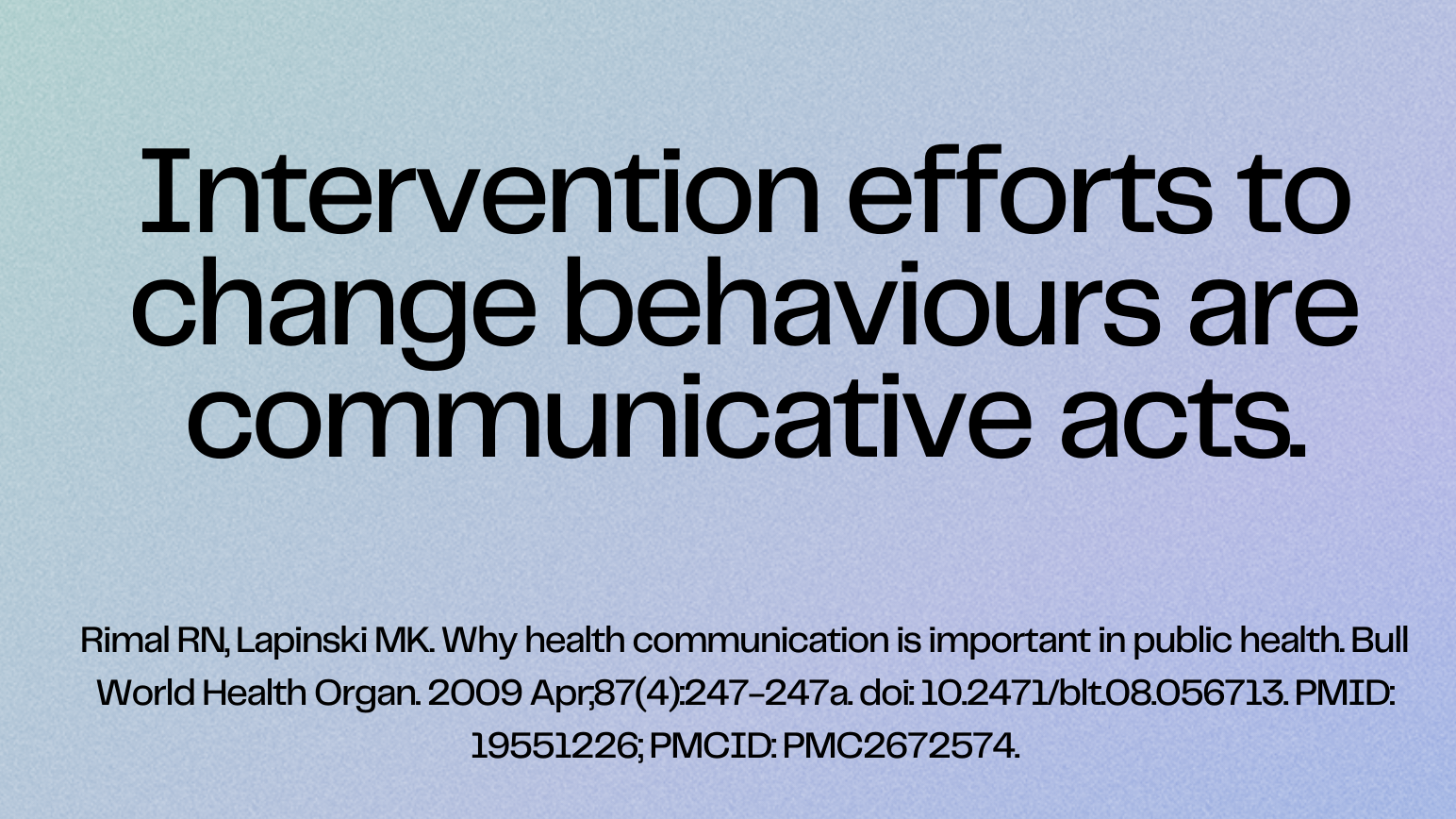
Then again, communications in Public Health have a major role in promoting health education, influence behavior changes, strengthen advocacy efforts, ignite fundraising strategies, build trust and political will, and so much more.
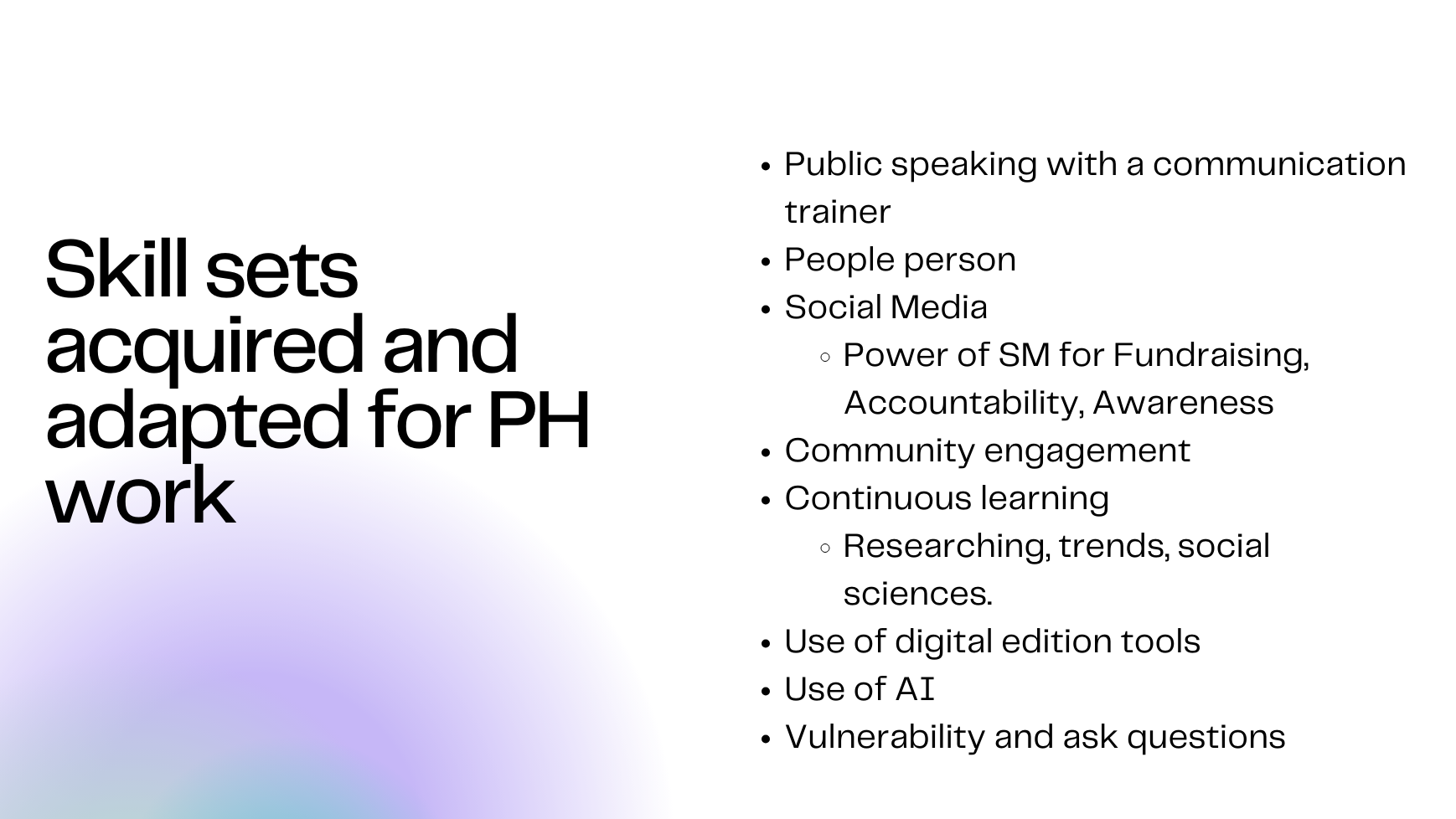
Below is a list of skills that I consider have been essential throughout my journey in Public Health Communications. These are based on my experience only and I continue to learn more as the world is constantly evolving.
Now I leave you with a couple of food for thought questions…
What is the type of narrative that we are telling within our organizations?
Does it align with the narrative that we’re bringing to the outside world and the services we provide as a health organization?
Are we conscious about the way we communicate and bring our messages across?

 Juan Román Mora Barrios, MD | MPH | MSc